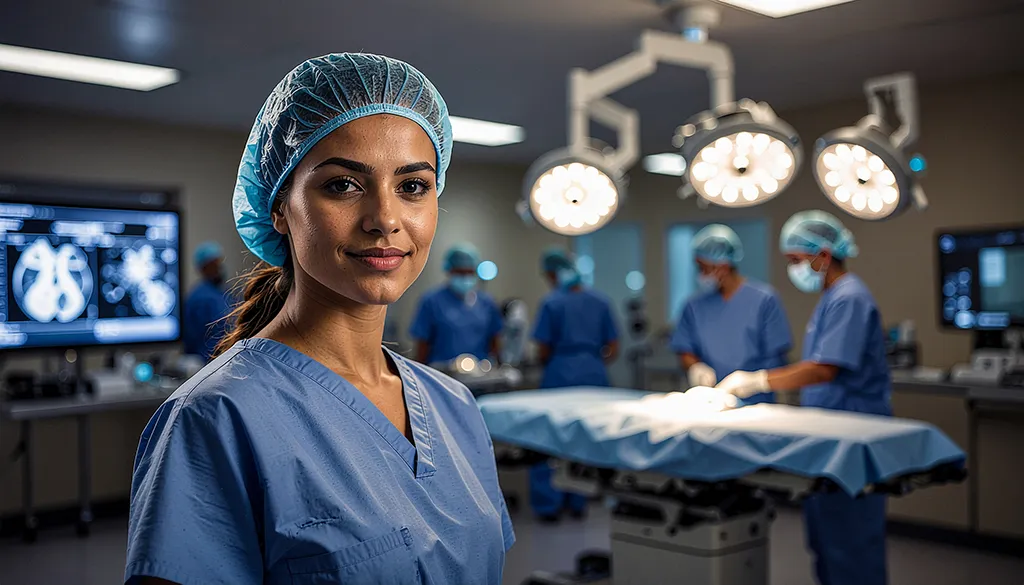
Breast Reconstruction Surgery

Breast Reconstruction Surgery

Breast Reconstruction (reconstructive mammaplasty) restores the breast's form and shape after mastectomy/lumpectomy, using implants (saline/silicone), tissue expanders, or the patient's own tissue (fl
Speak with the GMS CARE TEAM

Key Information

Breast Reconstruction restores the form and shape of the breast following mastectomy or lumpectomy, offering patients potential psychological benefits, restored femininity/confidence, and improved symmetry.
Treatment options generally involve three approaches: using saline or silicone implants (often a two or three-step process with a tissue expander), reconstructing the breast using the patient's own skin, fat, and muscle (flap technique), or a combination of both methods.
The timing and type of reconstruction are significantly affected by the patient's health status, including whether they require chemotherapy or radiation therapy (which can delay healing and change skin texture), and conditions like smoking, obesity, and diabetes increase surgical risks.
Newer techniques include using Acellular Dermal Matrix (ADM) to support the tissue expander and enable immediate reconstruction, and procedures like Skin-Sparing and Nipple-Sparing Mastectomy to preserve more of the natural breast skin and features for an improved aesthetic result.

About Breast Reconstruction Surgery

Breast reconstruction, also known as reconstructive mammaplasty or postmastectomy surgery includes a variety of procedures performed to restore the form and shape of the breast, following mastectomy or lumpectomy surgery.

Individual anatomy, aesthetic goals and the need for any postsurgical chemotherapy or radiation are factors which will determine your treatment options. Discussing your cancer surgery with a plastic surgeon before undergoing mastectomy is crucial, because the proposed cancer removal surgery may significantly affect the choices and the results of any type of breast reconstruction.

  • A mastectomy may leave insufficient tissue on the chest wall to cover and support a breast implant. Breast reconstruction following radiation therapy with a breast implant may require a flap procedure prior to tissue expansion. During the flap technique, the surgeon repositions your own muscle, fat and skin, creating or covering the breast mound.
  • Following mastectomy surgery, the most popular option is the tissue expander and implant.
  • You may also be given the option of deciding between silicone and saline breast implants.
  • Fat transfer is sometimes used to fill in deformities left by lumpectomies and mastectomies.
  • In very carefully selected patients, nipple-sparing mastectomy with autologous breast reconstruction provides good results. Your surgeon will tell you if you are an appropriate candidate for this procedure.

  • Chemotherapy following mastectomy can also affect the timing of your reconstruction.
  • Previous surgical history, past medical history and coexisting illnesses are factors in determining whether this surgery is suitable for you.
  • Radiation therapy significantly affects the timing and even the type of breast reconstruction you will undergo. It delays wound healing and can cause the skin to darken and tighten. Reconstruction, which may be delayed for months after radiation, may include the use of your own tissue to help replace some affected skin.
  • Results are best if you are not overweight (body mass index is under 30).
  • Smoking interferes with blood flow and can cause problems after surgery, delay healing and lead to larger scars.
  • You should not have blood-flow (circulation) problems or other serious health problems, such as high blood pressure and heart disease. Diabetes and autoimmune diseases, such as rheumatoid arthritis and scleroderma, increase the risk of wound healing problems and infections. Clotting disorders may increase the risks of breast reconstruction using flaps, and bleeding disorders and agents used to prevent blood clots increase the rate of postoperative bleeding.

General anesthesia is commonly used during your breast reconstruction procedure, although local anesthesia or intravenous sedation may be desirable in some instances.

For your safety during the surgery, various monitors will be used to check your heart, blood pressure, pulse and the amount of oxygen circulating in your blood. Your surgeon will follow the surgical plan discussed with you before surgery.

There are three basic options for breast reconstruction:

  • Using breast implants (saline or silicone).
  • Reconstructing the breast using your own skin, fat and muscle.
  • A combination of these methods.

    Most breast reconstruction methods involve several steps, requiring hospitalization.
    For more information regarding the procedures, please see the sub procedures section below.

How your scars look when fully healed depends on your age, genetics, the way your body heals, and how your incisions and underlying tissues are sewn together.

Even the best reconstruction cannot eliminate mastectomy scars, but when immediate reconstruction is performed, most of the breast skin is preserved to hold the implant or tissue flap and mastectomy incisions may be hidden in the inframammary fold under the breast or around the areola. When hidden around the areola, the small scars are covered when the areola is tattooed later on.

Flap reconstruction does leave a lengthy scar at the donor site, but scars on the abdomen or buttocks can be hidden by bathing suits and underwear. In some cases, lateral or vertical incisions from the nipple are required to accommodate reconstruction. These scars become less noticeable over time, but never disappear completely.

If you have a mastectomy without reconstruction, your surgeon will remove most of the breast skin through a long incision across your chest. The resulting scar is permanent. If you have reconstruction later, it will be done through this mastectomy scar, which is reopened to accommodate the implant or tissue flap. The mastectomy scar remains on the reconstructed breast, but grows pale over time.

Most breast reconstruction procedures take at least two to six hours to complete but may take longer.

Some common reasons why you may consider breast reconstruction are:

  • If you think reconstruction will give you a sense of psychological well being or a feeling of “wholeness”
  • To help restore your feelings of femininity and confidence in your appearance
  • To improve symmetry if only one of your breasts is affected
  • To allow you to wear low-cut necklines and normal swimwear

If you are in good general health, have a positive attitude and realistic expectations, you are most likely a good candidate for this procedure.

Speak with the GMS CARE TEAM

Sub-procedures

The Breast Reconstruction Surgery involves possible sub-procedures. To read more about the applicable sub-procedure(s), please read below.

Implant reconstruction procedures

This is normally a two-or three-step process. During the initial procedure, your surgeon shall insert a tissue expander beneath the skin and chest muscle, forming a skin-muscle envelope. The tissue expander is a modified saline implant with a valve, allowing more saline to be added after the first surgery. Serial injections of saline through the skin into the valve slowly fill the implant and will subsequently expand your breast mound, over two to six months. The skin-muscle envelope is slowly stretched until it reaches the size you want for the final implant. During the next stage of the procedure, the expander is removed and replaced with a softer breast implant (saline or silicone). Sometimes, with saline implants, the expander is kept in place for a longer period, allowing the size of the reconstructed breast to be changed (by increasing or decreasing the amount of saline) without implant removal. With a silicone implant, your breast size cannot be changed without another surgery.

Breast Reconstruction with Implants using Acellular Dermal Matrix

Acellular Dermal Matrix (ADM) is a sheet of tissue that has had its cells removed leaving a framework of collagen and elastin for support and cover. This tissue is specifically prepared to allow your body tissues to gradually grow into this material, ultimately replacing it with your own collagen and blood vessels. In the case of breast reconstruction: The Acellular Dermal Matrix acts like a hammock under the mastectomy skin-muscle envelope that supports the tissue expander and can also improve implant placement. This framework of molecules allows your body's cells to grow into the matrix, promoting the regenerative process that takes place during tissue expansion. ADM is usually combined with your chest muscle to cover the expander and maintain its position, and subsequently the position of the implant. The ADM procedure can be less invasive than other techniques, permitting a larger breast mound to be created at the time of the mastectomy and decreasing the number of office visits needed to reach the desired implant volume. When ADM is used, the expander can often be replaced with the final implant sooner than with other tissue-expansion techniques. In rare circumstances, an expander is not needed and the final implant can be placed into the created hammock at the time of the mastectomy with no further surgery required. The use of ADM products has enabled plastic surgeons to offer immediate breast reconstruction to more patients and to improve the overall results of breast reconstruction. Whether or not you're a candidate for this technique depends on the quality of your mastectomy skin envelope. ADM has been available since 1994 and has become popular in breast reconstruction within the past ten years. Different ADM products have different properties and your surgeon may recommend one over the other, depending on your situation.

Natural Grafts/Tissue Flap Surgery

In certain circumstances, especially if you have radiation-damaged tissues, your surgeon may recommend the use of your own tissue, which can provide coverage or replacement of the damaged tissues with healthy, non irradiated tissue. Reconstruction using autologous tissue and skin (from your own body) can look and feel more like a natural breast than reconstruction with implants. However, these procedures are more complex and invasive, usually prolong the hospital stay and leave scars in the areas from which the tissue was taken. Autologous fat grafting or fat transfer is another option for treating radiation-damaged tissues or small areas of contour irregularities.

Skin-Sparing Mastectomy

If you are undergoing immediate breast reconstruction, your surgeon may perform a skin-sparing mastectomy to keep as much of your breast skin intact as possible. The tumor and clean margins (areas free of cancer cells) are removed along with the nipple, areola (pigmented skin surrounding the nipple), fat and other tissue that make up the breast. What remains is much of the skin that surrounded the breast. This skin can then be used to cover a tissue flap or an implant. The major benefit of a skin-sparing mastectomy is that it avoids using skin from other parts of your body for reconstruction, which can be a different color, texture and thickness compared with natural breast skin.

Nipple-Sparing Mastectomy

This is a newer procedure that removes the tumor and clean margins as well as the fat and other tissue in the breast, but leaves the nipple and areola intact, improving the overall look of the reconstructed breast. Not all women are candidates for this and there may be other complications. The nipple will likely lose sensation and some projection. In some cases, the tissues may break down and some or all of the nipple and areola may have to be removed later. There is still debate as to the risk of leaving the nipple and areola in terms of breast cancer recurrence and this should be discussed with your surgeon, who can assess your individual risk based on your tumor type, family history and other factors.

Nipple Reconstruction with Implant Procedures

Nipple reconstruction can be performed when the permanent implant is inserted as the third step in the reconstruction process. Recreating the nipple and areola gives the reconstructed breast a more natural look and can help hide scars. The nipple is normally recreated by lifting a flap of skin from the reconstructed breast itself and folding it in such a way as to create a small piece of tissue with projection. The areola is usually created by tattooing the area or by grafting skin from the groin area, which has a tone similar to the skin of the areola. The scar from where the skin is taken can be hidden in the bikini line. Many surgeons prefer to delay the nipple reconstruction until the breast implant has settled into its final position, since this may affect the final position of the reconstructed nipple. After your procedure is completed, you will be taken into a recovery area, where you will continue to be closely monitored. Occasionally, drainage tubes may be used for a short time following surgery.

Doctors performing Breast Reconstruction Surgery

All procedures at GMS Cyprus are performed by internationally recognized surgeons from Israel, the EU, and the US. Each selected for their exceptional qualifications, surgical expertise, and commitment to patient care.

Our doctors are leaders in their fields, with extensive experience in advanced techniques and consistently high success rates. They work closely with our medical board and patient support team to ensure each treatment is safe, effective, and tailored to the individual.

The GMS Cyprus Promise

We are committed to providing every patient with access to world-class surgeons, personalized care, and unwavering support throughout their medical journey.

We carefully select our surgeons based on international standards, clinical excellence, and patient outcomes. We believe that medical travel should be stress-free, transparent, and guided by people who genuinely care. Our promise is to treat you with dignity, protect your privacy, and give you peace of mind every step of the way.

How it works

Step 1
Submit a consultation request
Fill out a short form and let us know your medical concern. A coordinator will contact you within 48 hours.
Step 2
Share Your Medical History
Send your relevant documents (scans, reports, etc.). We’ll help you prepare them and handle translation if needed.
Step 3
Receive your medical proposal
Receive a detailed proposal, including surgeon profile, recommended treatment, estimated costs, and recovery plan.
Speak with the GMS CARE TEAM

Testimonials

Ilanit Boker

Ilanit Boker

I happily recommend the services of the GMS team. I needed a unique procedure which is not performed in Israel and I turned to them. 

Over a telephone conversation with GMS representative Roy, I felt caring attention and confidence that he would help in everything. He accompanied us throughout the entire process, before the flight and even after. 

In addition to Roy, we would like to sincerely thank Oriya, our allocated Israeli speaking patient coordinator of the company in Cyprus. 

Even before our departure, Oriya was in touch with us helping with any issues and made sure that we arrived fully prepared – taking into account the smallest details; even to the point of finding out our food preferences, and despite the late hour of our arrival at the hotel, she ensured an exquisite meal was waiting for us in the room. Oriya greeted us upon arrival and truly made us feel like we were her personal guests. She accompanied us throughout the entire day of the operation – attentively, with endless care and continued patience.

I felt like I had a good friend with me in the hospital. This kind of treatment doesn’t happen very often… At the end of the day we parted, hugging each other, and Oriya gave recommendations on where to go and what to do in the time remaining before returning home.

I just don’t have enough words to thank GMS and Oriya for everything. I can only recommend with a reassurance that those who need it should use their services.

Almog Brand

Almog Brand

When I was looking for information about palm surgery, I found many recommendations about Dr. Amir Oron. After a consultation with Dr. Amir, I was surprised to learn that my health insurance does not guarantee that he will be the surgeon to perform the procedure.

That is when I contacted GMS, who explained how I could have the surgery performed by the physician of my choice – which gave me peace of mind. It is very important for me to share my experience, as the service I received through GMS exceeded any similar experience in Israel: From the beginning I was assigned a GMS representative from Israel, who explained in detail what my experience would be and answered all my questions about the operation and the treatment process. (Thanks, Roy!)

All I had to do was fill out the application form. GMS representatives took care of everything themselves!

They contacted the insurance company on my behalf and even had them check the status of the application until the financial commitment for the surgery was received. We agreed with on the surgical date, booked the flights at a convenient time for me, and also dealt with the hotel reservation. The GMS staff even reviewed the menu and took any dietary restrictions into consideration on my behalf.

We were picked up from the airport in Larnaca, Cyprus where we met the wonderful Oria, who accompanied us throughout the entire visit and took care of every detail; from registration to preparation for the operation.

This is essentially a VIP service that made the entire experience relaxed and stress-free.
The assigned coordinators continued caring after my return to Israel. They were interested in my recuperation post-operatively and also ensured all financial matters were dealt with; all this, by the way, without any commissions or payouts on my part, but directly with my insurance.
In a word – an amazing experience!
In short – I recommend it!

Thank to GMS, thank you Roy, thank you Uriah and thank you Dr. Oron.

Nirit Shortz-Raphael

Nirit Shortz-Raphael

I do not even know where to start!!
Overall, the service exceeded all my expectations!

Roy – thank you for your patience, quick responses (minutes!), availability, caring and clear explanations! You are inimitable! Oriya – you are amazing! Thank you for every smile, hug, help, guidance, explanation… really! You are simply amazing!

Every time I was asked by friends and family about the surgery, I immediately started talking about your amazing service! I felt warmth and love, and everyone who was with me felt the same!
We never stop talking about you, and really, only good things!

You have entered our hearts!
Thank you very much for everything! I hope to see you in the future, under different circumstances.

Nadav Ben-Ezer

Nadav Ben-Ezer

When one thinks of “Medical Operation” overseas, the last thing that comes to mind is a “Great Experience”, but this is exactly what I have experienced, going through a prostate removal procedure via GMS Cyprus. With their professional and compassionate approach, the GMS Cyprus team provides to the confused and worried patient a complete transparent VIP envelop, which takes care of all the logistics involved in “Medical Tourism” for the patient and their escort, as well as assembling a world class international medical team and medical facilities suitable to treat the medical diagnosis at hand.

From the first time the medical situation was diagnosed, and the first contact was made, the GMS team was there to remove the hassle and understand my concerns and worries about the medical issue and being far from home, and they handled every detail of the logistics of travel, insurance company requirements and medical preparations. From first arrival at the luxurious hotel, assigned to the first night and for my personal escort, the GMS management, Udi and Clair, has treated me as family away from home and personally came to greet me and attend firsthand to all my needs and requests. To top it all, they assigned their own personal escort, the wonderful Aia, which was available 24/7 and door to door to handle any need and detail and helped interface with the local hospital team.

I want also to recommend the choice of the hospital at Limassol, which is modern and clean, and of course GMS team have in advance reserved a private and spacious room and nominated a local doctor, which was familiar with my case and participated in the treatment and which came often to check my condition and parameters.

To summarize, I would not go so far as to wish such treatment to anybody, but if you must go through the medical procedure, the VIP treatment provided by GMS is a legitimate alternative, combining easy logistics, professional medical treatment by your own doctor, modern hospital, relaxed overseas experience and personal compassionate escorting to ease and sweeten the experience.

Dorit

Speak with GMS Cyprus care team - Medical Tourism in Cyprus

speak with us

Do you have any questions? Contact our team, they will answers all of your questions and will connect you with the top-level surgeons and medical care.

Google reCaptcha: Invalid site key.